We have been learning all about insects and the important role they play in our forest ecosystem!
We started by making our own bug houses from recycled materials. The children carefully designed and built lots of different spaces for insects to live, thinking about what bugs might need to feel safe and sheltered. Some children even chose to hang their bug houses in the trees, ready to welcome some new residents.
Our mud kitchen was transformed into a busy bug café, serving up worm spaghetti, ladybird stew, bee soup and butterfly cupcakes! There was lots of imaginative role play, communication and creativity as the children prepared their insect-inspired menus.
Using magnifying glasses, the children searched through mud to find hidden insects and used their expert forest school knowledge to identify them. We then took our magnifying glasses around our basecamp to look for real minibeasts in their natural habitats. The children carefully lifted logs and explored under stumps, discovering worms, millipedes, centipedes and even some beetles. These investigations helped develop curiosity, observation skills and our understanding of the natural world.
We used leaves, sticks and other natural materials to create beautiful butterflies. The children also used clay to make their own insects, adding stone, pinecone or oak gall heads, stick legs and leaf wings. We talked about the insects we had discovered during the morning and decided which creatures our creations represented.
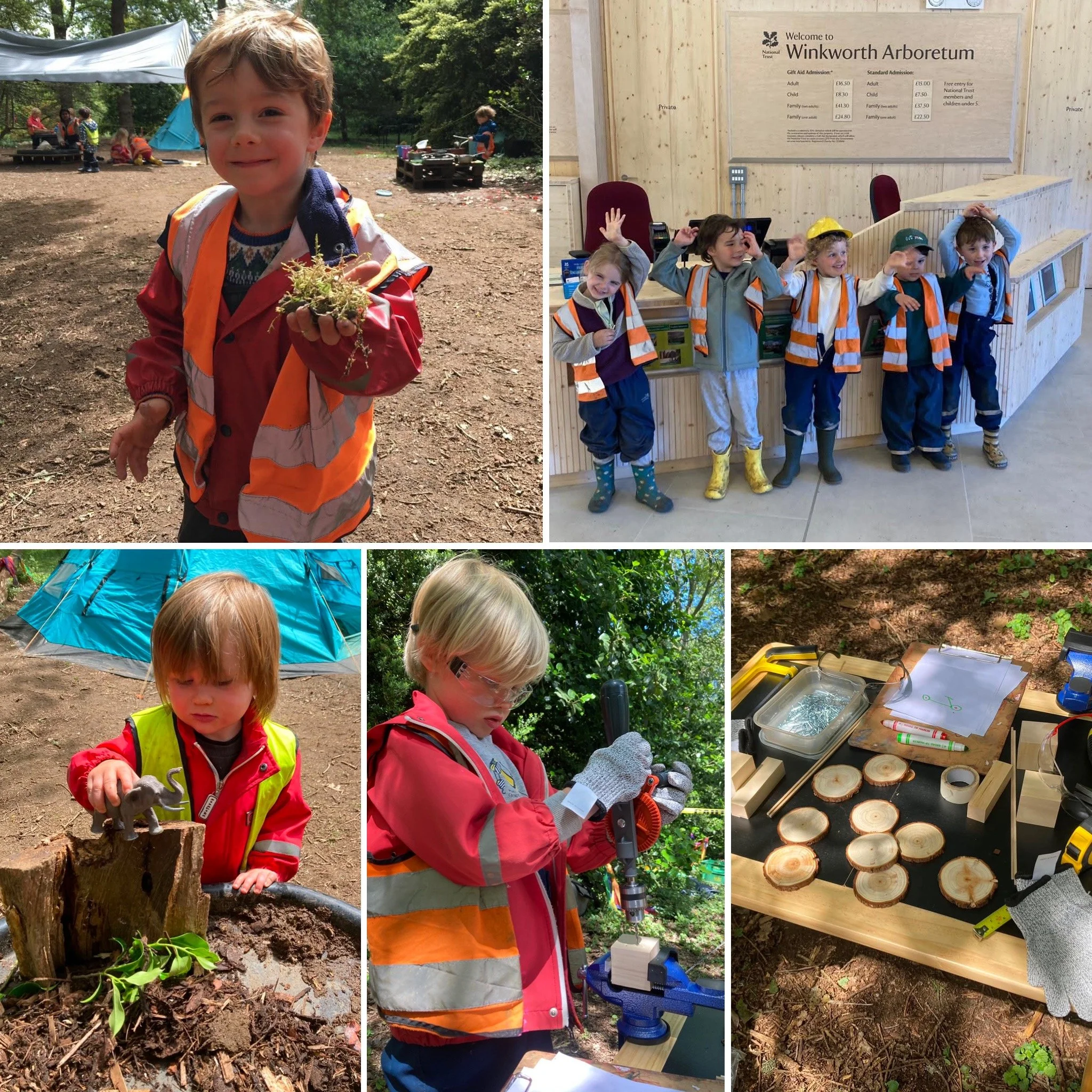
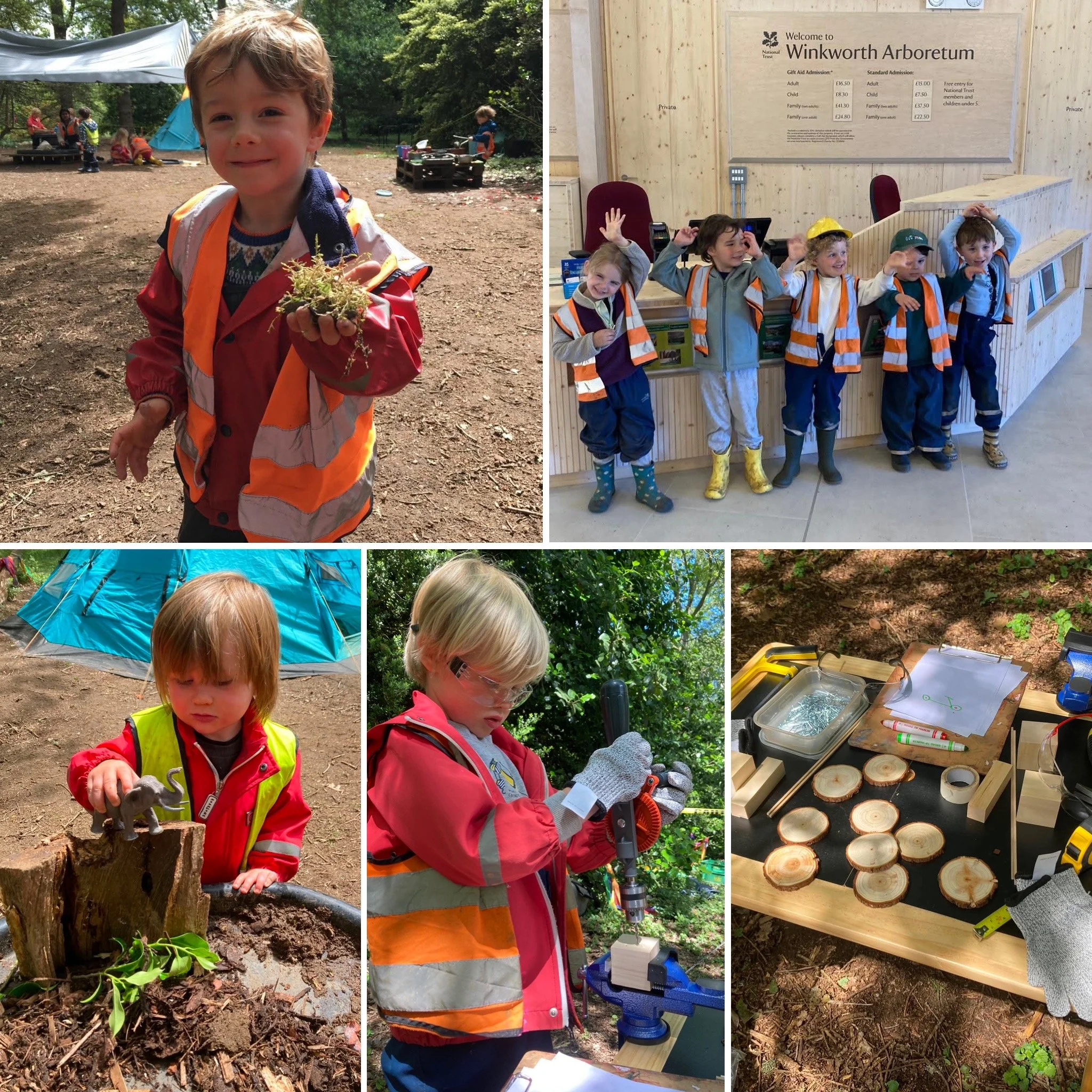
At forest school, we are always learning how to use tools safely and exploring the many things we can create with them. This week saw the opening of our very first Tool Tinker Station! The children chose from a variety of wood and materials, decided what they wanted to make and then used saws, drills and hammers to bring their ideas to life. We saw fantastic creativity, problem solving, perseverance and independence as the children worked on creations entirely of their own design.
What a wonderful week of discovery, creativity and hands-on learning as we explored the world of insects and continued to develop our confidence with tools and natural materials.
We also celebrated something we are very lucky to be surrounded by every day in the Arboretum... trees! Throughout the week, we explored the many ways trees help animals, support the world around us and provide us with useful materials. We even learnt about how trees "eat" by taking up water and nutrients through their roots.
We explored a woodland small-world full of logs, branches, trees and animals. The children discovered that animals might eat from trees, build nests in them, live inside them, hide amongst their branches, sleep beneath them or burrow underneath their roots. These conversations helped develop our understanding of the world and encouraged lots of communication and language as the children shared their ideas and experiences.
Inspired by the animals we had been talking about, the children created their own bird nests using clay, sticks, leaves and moss collected from around basecamp. They carefully shaped and moulded their nests, developing fine motor skills while expressing their creativity and learning more about how birds use trees to help keep their babies safe.
To help us understand how trees grow, we opened a special ‘Deliveroot’ area. The children mixed nutrient-rich mud potions and transported them through our gutter runs to the tree roots, imagining how trees absorb water and nutrients from the soil. This hands-on exploration builds early scientific thinking and helps the children understand how trees "feed" themselves.
Our mud kitchen was transformed into a busy Tree Café, where bark, sticks, pinecones and leaves became the ingredients for all sorts of imaginative woodland recipes. The children worked together to create soups, cakes and magical concoctions, developing communication, creativity and collaborative play.
We also explored planting and growing through our woodland-themed mud playdough. Using sticks, herbs and natural materials, the children created their own miniature forests, carefully planting trees and designing woodland habitats.
Did you know that trees are not only important for wildlife but also provide us with building materials? At basecamp, we built a new den with willow sticks, which we sheltered in to read stories and learn how different parts of trees can be used for construction. We were then lucky enough to visit the new visitor centre at Winkworth, where we spotted another fantastic example of how wood can be used in building. We learnt that the beautiful new building is clad in larch!
Little Forest Folk
Winkworth