Our Week in the Forest
World Book Day - Helicopter Stories 📖
For our World Book Day celebration, Irem led a Helicopter Story session with each member of the camp. There is no better way to honour the medium of literature than letting our adventurers pick up the pen themselves. Irem had some 1-1 time with every child, who each had the opportunity to build onto an interesting story, taking the narrative on all kinds of twists and turns. Some children decided to set the scene with interesting characters, some described the environment, whilst others created drama, mischievous happenings and unexpected twists 🎭 Every child had an opportunity to express their own thoughts and put forward ideas, but equally creating a shared result, a whirlwind of a story - unique to team Fulham. Irem transcribed all conversations and noted all the unfolding events. To celebrate the achievement, the story was shared in whole at the end of day story time. 🍃
Learning through Projects - Bug Hotels 🐛🏨
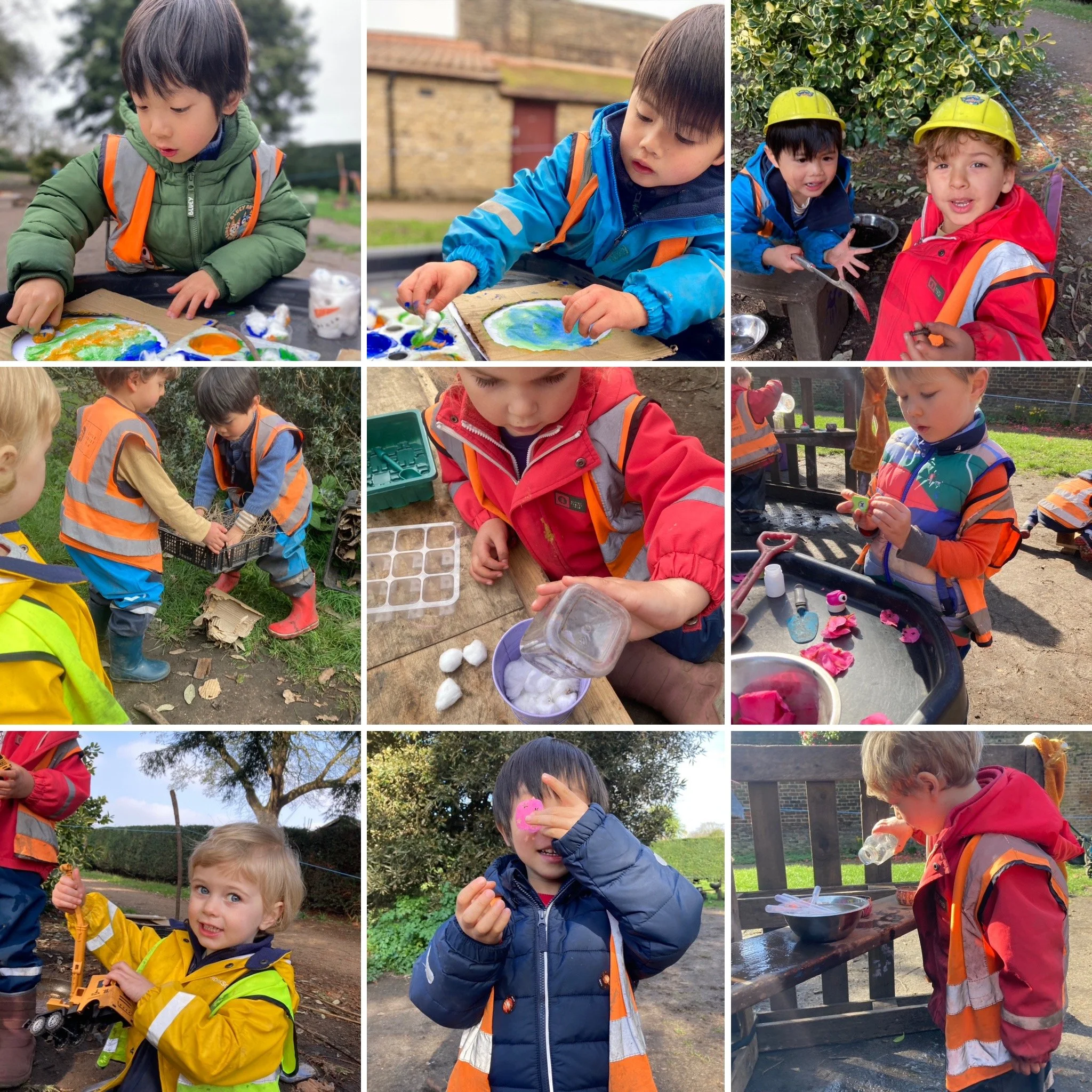
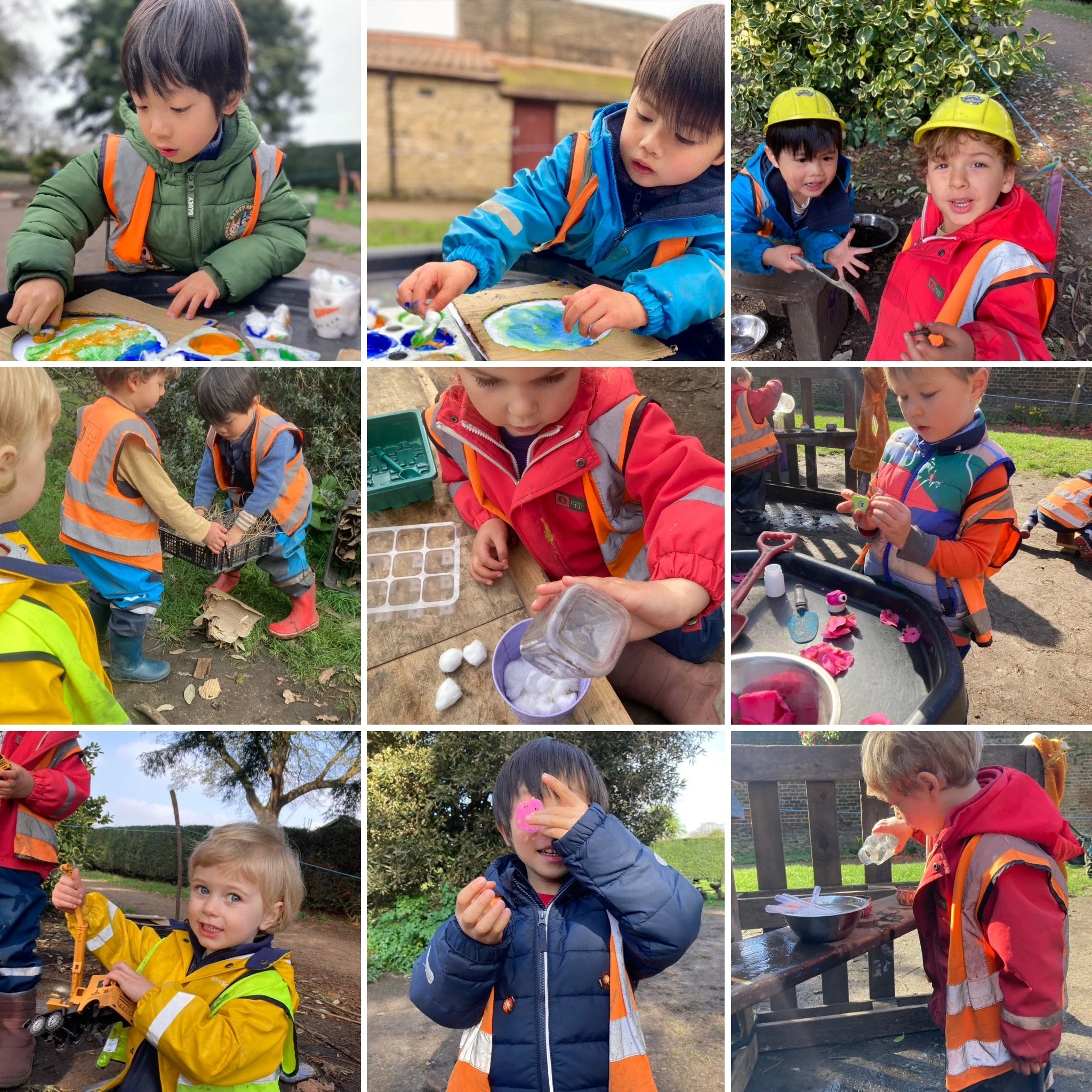
Inspired by the teachings of Reggio Emilia, a teaching philosophy we hold dear to us here at Little Forest Folk, is the focus on project based learning. Working towards a shared goal solidifies our learners as a community, giving opportunities to support one another, share thoughts openly, build onto a concept and to bring ideas from paper to reality. This week we have been focusing on bug hotels, which are a habitat created out of natural and recycled materials which could be home to creepy crawlies 🐜 We recycled and repurposed cardboard boxes, choosing ones wisely which contained compartments - perfect for rooms and floor levels. We even thought of using an old crate for even more structure. Children gathered sticks, crunchy and fresh leaves, wet and dry soil, pine cones and old bark. Everyone discussed the needs of the creatures around them. What would an ant like to drink? Where could the woodlouse sleep? Would the spiders enjoy a stick-made climbing frame? We will continue to build on this concept, investigating whether we have had any bugs check-in to a private suite 🦟
The Kindness Awards - Celebrating each other and ourselves 🌟 🥇
The Annual Kindness Awards are a special opportunity for us to celebrate the many acts of friendship, kindness and care that our little ones constantly practice. As the awards approach, we start to think outside of ourselves and really consider the thoughts of others. How have your friends shown kindness recently? Did they share a toy with a friend who was struggling at morning drop off? Did they help another child put up their hood or zip? What acts of kindness are you spotting through the day? How do we keep our forest community safe, happy and supported without words and actions? We find these discussions really support children to consider the impact of their actions and to feel pride in their choices. In the EYFS we intertwine ‘British Values’ into our approach and activities. In the Early Years this means, the right to have your feelings heard, voting/democracy to create fair environments and celebrating diversity. With this in mind, we allowed the children to vote in categories. We focused on magic manners, kindness, sharing and good listening. Everyone was asked what acts they had noticed. All stated another child rather than themselves, truly celebrating their peers achievements. Children got to count votes and we added up the winners and runners up. All our little explorers got to walk down the red carpet, receive medals and trophies, all whilst clapping and cheering for their peers. It was a super successful show!
Celebrating Bees - Messy Play and Pollination Experiments 🍯🐝
To celebrate these very important creatures, especially in the spring-time, we let the magical world of bees inspire some messy play. Using PVA glue and yellow paint, Maria created a gloopy mixture which looked just like runny honey. She lined the bottom of a tuff tray with this mixture and poured in some handmade paper bees - they were all trapped in the sticky honey kingdom! Over the tuff tray, Maria used masking paper to create a design which looked just like the structure of a bee-hive. Using tweezers, our little adventurers put their developed fine motor and pincer grip skills to good use and navigated around the maze, pinching and pulling the bees from the area. We worked together until all bees were safe from the honey pool. Vasiliki, inspired by the pollination process, led a successful experiment to demonstrate the process of collecting pollen. Using turmeric powder and cotton balls, we explored how the fluffy surface can collect the powdery substances, explaining bee’s fuzzy bellies collect the pollen as they go. We then pulled apart some fallen flowers to investigate and identify the parts of the plant, like the ‘pistol’, ‘stem’ and ‘petal’.
Little Forest Folk
Fulham